
Cooking boneless, skinless chicken breasts can be tricky, especially if you’re aiming for juicy, flavorful meat without adding extra salt. Many people struggle with dry, rubbery chicken, but with a few key techniques, you can enjoy tender, succulent chicken that fits perfectly into a low-sodium diet. This recipe ensures each bite is packed with flavor while keeping sodium content incredibly low, making it ideal for heart-healthy meals or anyone watching their salt intake.
Choosing the Right Chicken
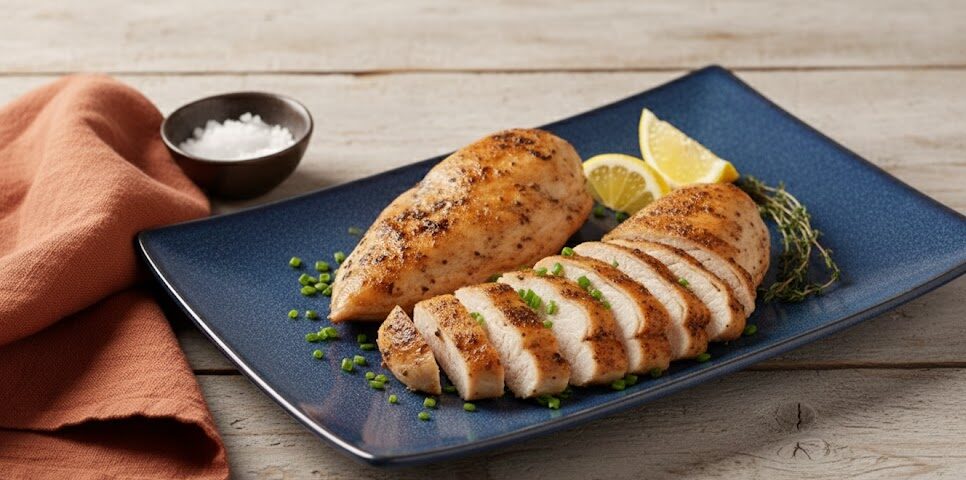
The foundation of a juicy chicken breast starts at the store. Not all chicken is created equal—some are pre-brined or injected with a salt solution, which can drastically increase sodium levels. To keep your chicken naturally low in sodium, choose products labeled as “no added sodium” or “unseasoned.” Organic or hormone-free chicken is often a safer choice because it contains less sodium naturally and is free from unnecessary additives.
Selecting the right chicken ensures you start with clean, wholesome ingredients, which is the first step toward a perfectly moist result.
Why Temperature Matters
One of the most common reasons chicken turns dry is overcooking. Many cooks aim for a perfectly golden exterior, but letting the meat cook past its safe temperature squeezes out precious juices.
The goal is to cook the chicken to an internal temperature of 165°F (74°C). This temperature is high enough to kill harmful bacteria while still keeping the meat tender. Using an instant-read thermometer is essential: insert it into the thickest part of the breast for the most accurate reading. Once it hits 165°F, remove it immediately from the oven or pan. Even if the juices appear slightly pink, resting the chicken will redistribute moisture, ensuring every bite is juicy.
The Importance of Resting
Resting chicken after cooking is often overlooked, but it’s critical for retaining moisture. During cooking, heat forces the juices toward the center of the breast. If you slice the chicken immediately, those juices escape, leaving meat dry.
After removing the chicken from the oven, cover it loosely with foil and let it rest for 5–10 minutes. This short waiting period allows the juices to flow back through the meat, resulting in a tender, flavorful breast that slices beautifully.
Simple, Flavorful Ingredients
This recipe keeps things minimal but flavorful. The ingredients are easy to find, and each adds a subtle depth of taste without increasing sodium:
- Boneless skinless chicken breasts
- Olive oil
- Salt-free seasoning of choice
- Garlic powder
- Paprika
- Black pepper
You can also experiment with different spice blends, like a salt-free Italian herb mix or a light sprinkle of smoked paprika, to add variety while keeping the dish heart-healthy.
Essential Tools for Perfect Chicken
While you don’t need professional kitchen gadgets, a few tools make a huge difference:
- Baking sheet or shallow baking dish
- Instant-read thermometer
- Aluminum foil (for resting)
These items help ensure even cooking and make the cleanup process simple.
Preparing the Juiciest Chicken Breasts
Follow these steps to guarantee tender, flavorful results every time:
- Preheat the oven: Set to 425°F (220°C) and line your baking sheet with foil for easy cleanup.
- Season the chicken: Drizzle olive oil over the chicken breasts, then sprinkle garlic powder, paprika, salt-free seasoning, and black pepper. Toss to coat evenly.
- Arrange properly: Lay the chicken in a single layer. Avoid stacking or overcrowding the pan to ensure even cooking.
- Bake: Roast for 15–20 minutes, or until the internal temperature reaches 165°F (74°C). Cooking times may vary depending on the size of your chicken breasts.
- Rest: Remove from the oven and cover loosely with foil for 5–10 minutes before slicing.
These simple steps transform a simple chicken breast into a juicy, satisfying meal that works for lunch, dinner, or meal prep.
Flavor Variations
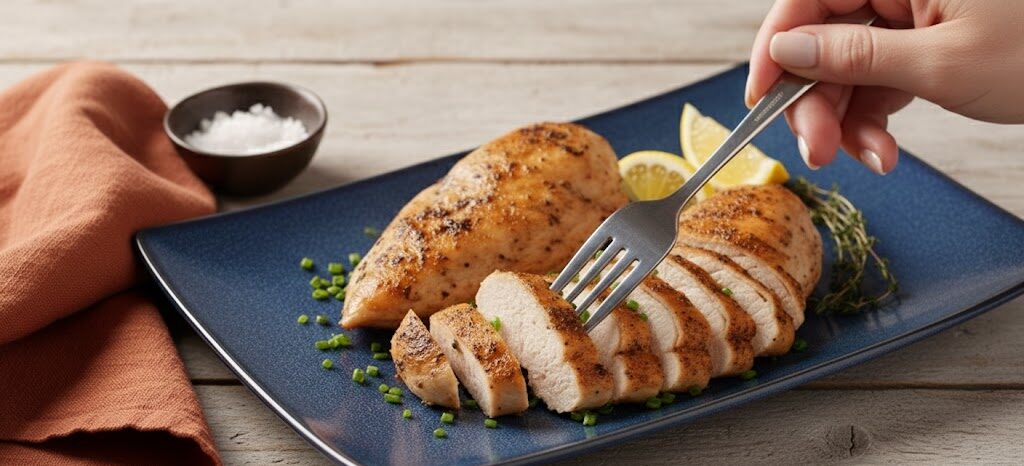
The basic seasoning is delicious on its own, but you can customize this recipe for a variety of flavors:
- Swap paprika for smoked or hot paprika for a subtle smoky or spicy kick.
- Add a salt-free garlic-herb blend for Mediterranean-style chicken.
- A squeeze of fresh lemon or lime juice brightens the flavor, making it perfect for salads, wraps, or tacos.
These variations make this recipe versatile enough to enjoy throughout the week without feeling repetitive.
Print
The Ultimate Juicy Low-Sodium Chicken Breast Recipe
Ingredients
4 boneless, skinless chicken breasts (8–10 oz each)
1–2 tablespoons olive oil
1 teaspoon garlic powder
1 teaspoon paprika
1 teaspoon salt-free seasoning (any preferred brand)
½ teaspoon black pepper
Instructions
-
Preheat the oven: Set to 425°F (220°C) and line a baking sheet with foil or lightly grease a baking dish.
-
Season the chicken: Place chicken breasts on the sheet or dish. Drizzle with olive oil, then sprinkle garlic powder, paprika, salt-free seasoning, and black pepper. Toss gently to coat evenly.
-
Arrange properly: Lay the chicken in a single layer. Avoid overcrowding to ensure even cooking.
-
Bake: Roast for 15–20 minutes, or until an instant-read thermometer inserted into the thickest part reads 165°F (74°C).
-
Rest: Remove from the oven and cover loosely with foil for 5–10 minutes before slicing.
Notes
- Cooking times: Chicken breast sizes vary. Always rely on an instant-read thermometer for the most accurate results.
- Storage: Cooked chicken can be stored in the fridge for up to 4 days or frozen for up to 3 months.
- Defrosting frozen chicken: Always thaw in the refrigerator overnight for best results.
- Seasoning: Feel free to adjust spice blends to your preference, keeping sodium low. Garlic, paprika, herbs, and citrus work beautifully.
- Meal prep: Sliced chicken works well in salads, wraps, sandwiches, or paired with roasted vegetables for a balanced, heart-healthy meal.