
If you’re looking for a wholesome dinner that’s easy to prepare, light on sodium, and still full of bold, satisfying flavor, this one-pan balsamic chicken with zucchini noodles is exactly the kind of recipe you’ll want to keep on repeat. It’s designed for busy weeknights, simple grocery lists, and anyone who wants to enjoy a comforting meal without relying on excess salt.
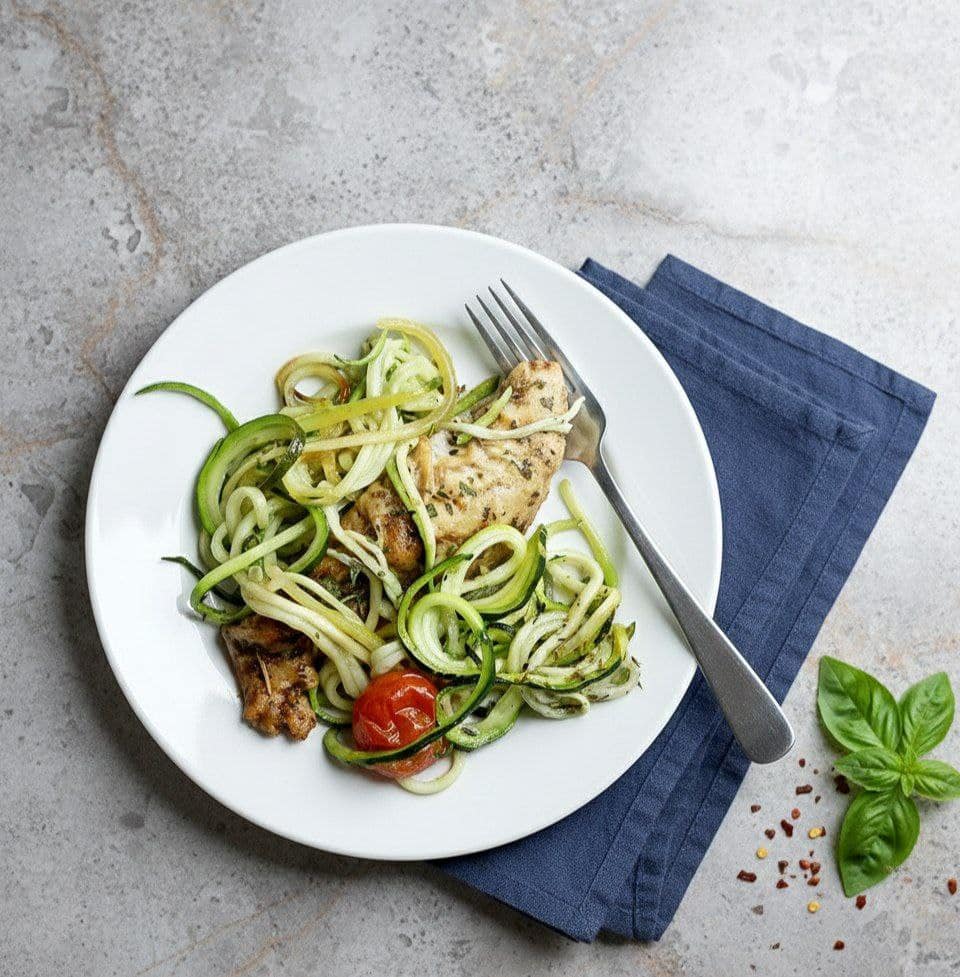
This dish brings together tender marinated chicken and freshly spiralized zucchini noodles, all roasted together on a single sheet pan. The result is a balanced meal that feels nourishing and vibrant, with minimal cleanup and maximum payoff. Even better, everything cooks in stages so the chicken stays juicy while the vegetables remain crisp-tender and fresh tasting.
With an approximate sodium content of around 150 mg per serving, this recipe fits beautifully into a low-sodium lifestyle while still tasting rich and satisfying.
A True One-Pan Dinner
One-pan meals have earned their place in home kitchens for good reason. They’re efficient, practical, and ideal for evenings when time and energy are in short supply. Using just one pan means fewer dishes to wash, less stress after dinner, and more time to actually enjoy your meal.
Another benefit of one-pan cooking is how visually appealing it can be. When protein and vegetables roast together, the colors deepen and textures contrast in a way that feels restaurant-worthy without any extra effort. In this recipe, the golden edges of the chicken pair beautifully with glossy cherry tomatoes and bright green zucchini noodles.
From a nutritional standpoint, one-pan meals are also incredibly helpful when you’re watching sodium. Because you’re seasoning everything yourself, you stay in full control of what goes into the dish—no hidden salts, no processed sauces, and no surprises.
Flavor Without Excess Sodium
One of the biggest challenges of low-sodium cooking is building flavor without relying on salt. This recipe solves that problem by layering ingredients that naturally bring balance and depth.
The marinade combines tangy balsamic vinegar with a touch of honey for sweetness, Dijon mustard for sharpness, and a blend of dried Italian herbs for an earthy, savory backbone. A small pinch of red pepper flakes adds gentle heat without overpowering the dish.
When the chicken roasts, the marinade caramelizes slightly, creating a rich, glossy coating that tastes far more indulgent than its sodium content would suggest. The vegetables soak up the pan juices, making every bite cohesive and satisfying.
Ingredient Notes and Pantry Staples
Another reason this meal works so well is its reliance on simple, pantry-friendly ingredients. Everything used here is easy to find and likely already part of your regular grocery rotation.
Zucchini and cherry tomatoes form the vegetable base. Zucchini is especially popular in low-sodium cooking because it has a mild flavor that absorbs seasonings beautifully, while also adding volume and texture without heaviness. Spiralizing it into noodles keeps the dish light and modern.
The chicken is best made with boneless, skinless breast tenderloins. When shopping, it’s worth checking labels carefully, as some packaged chicken is injected with saline solutions. Choosing minimally processed chicken helps keep the sodium count as low as possible.
Dried Italian seasoning brings together herbs like oregano, basil, rosemary, and thyme—an easy shortcut that adds complexity without extra ingredients.
Preparation Overview
The preparation for this dish is intentionally straightforward. The marinade comes together in minutes with a simple whisk, and the chicken only needs a short resting time to absorb flavor. While the chicken marinates, the vegetables can be prepped and tossed with olive oil and herbs.
The oven does most of the work. The chicken starts cooking on its own so it can develop color and cook evenly. The vegetables are added later, ensuring they don’t overcook or become watery.
This staggered cooking method is key to achieving the ideal texture: juicy chicken, tender zucchini noodles, and tomatoes that are softened but still hold their shape.
Why Zoodles Work So Well Here
Zucchini noodles are a natural fit for this recipe. They cook quickly, pair well with acidic flavors like balsamic vinegar, and keep the overall dish light and digestible. Unlike pasta, they don’t require boiling, which further simplifies the process and keeps everything contained to one pan.
If you’re new to spiralized vegetables, this is a great entry point. The flavors are familiar, the technique is forgiving, and the end result feels satisfying without being heavy.
Helpful Cooking Tips
- Pat the chicken dry after marinating to help it roast rather than steam.
- Avoid overcrowding the pan so everything cooks evenly.
- Add the vegetables only during the final cooking stage to preserve their texture.
- Let the chicken rest briefly before serving to keep it juicy.
Frequently Asked Questions (Preview)
This recipe is flexible and adaptable. Boneless chicken thighs, yellow squash, or other spiralized vegetables can easily be substituted with small timing adjustments. These variations allow you to customize the dish based on what you have on hand without compromising flavor or nutrition.
Substitutions and Variations
One of the strengths of this low-sodium balsamic chicken and zucchini noodle dish is how adaptable it is. With a few simple swaps, you can tailor it to your preferences or what you already have in your refrigerator.
Chicken options:
Boneless, skinless chicken thighs work very well in this recipe and offer a slightly richer texture. Smaller thighs will cook in roughly the same time as tenderloins, while thicker pieces may need an extra 5–10 minutes in the oven. Always rely on internal temperature rather than time alone to ensure doneness.
Bone-in chicken can also be used, but it will require a longer roasting time. If you choose this route, plan to add the vegetables later so they don’t overcook.
Vegetable swaps:
Zucchini can be replaced with yellow summer squash without changing the cooking time. The color contrast is beautiful, and the flavor profile remains mild and complementary.
Other vegetables that spiralize well include carrots, parsnips, turnips, sweet potatoes, and beets. Keep in mind that firmer vegetables may need a slightly longer cooking time or thinner spiral cuts to soften properly.
Cherry tomatoes can be swapped for sliced bell peppers, thinly sliced onions, or even mushrooms for a deeper savory note.
Spiralized Vegetable Ideas
If you enjoy using a spiralizer, this recipe opens the door to endless combinations. Mixing two or three vegetables together can add visual interest and varied texture to the pan. For example:
- Zucchini and carrot noodles for color contrast
- Sweet potato and onion for a heartier version
- Kohlrabi or broccoli stems for added crunch
Fruit can also be spiralized if you want to experiment with sweet and savory combinations. Apples or pears pair surprisingly well with balsamic flavors, though they will soften more quickly than vegetables.
Serving Suggestions
This dish is designed to be a complete meal on its own, but it also pairs nicely with simple sides if you want to round out the plate.
A lightly dressed green salad with arugula or watercress complements the acidity of the balsamic glaze. A squeeze of fresh lemon and a small amount of olive oil are often enough to bring everything together without adding unnecessary sodium.
If you’re serving this to guests or family members with higher calorie needs, you can add a small portion of plain rice, quinoa, or unsalted potatoes on the side while keeping the main dish unchanged.
Storage and Reheating Tips
Leftovers store well and make an excellent lunch option for the next day.
- Refrigeration: Store cooked chicken and vegetables in an airtight container for up to 3 days.
- Reheating: Gently reheat in the microwave until warmed through. For best texture, reheat in short intervals to avoid overcooking the zucchini noodles.
- Meal prep: If planning ahead, you can marinate the chicken up to 12 hours in advance and keep the vegetables prepped separately.
Cooking Notes for Best Results
- Choose balsamic vinegar with a naturally rich flavor; a well-balanced vinegar adds depth without needing salt.
- Always check labels on mustard and packaged chicken, as sodium content can vary widely.
- Avoid overcrowding the sheet pan. If necessary, use two pans so the chicken roasts instead of steaming.
- Let the chicken rest for a few minutes after cooking to lock in juices before serving.
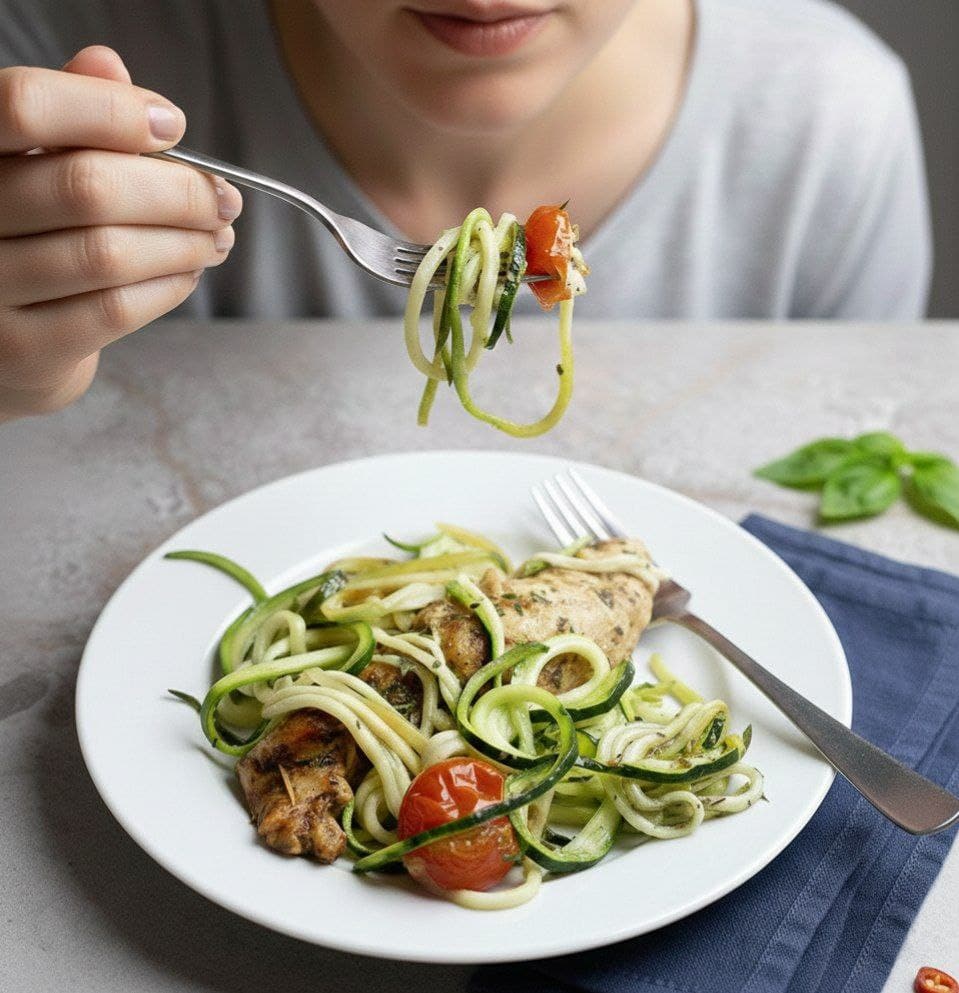
One-Pan Balsamic Chicken with Zucchini Noodles (Low Sodium & Flavor-Packed)
- Total Time: 35 min
Description
Tender marinated chicken roasted alongside zucchini noodles and cherry tomatoes in one pan. A flavorful, low-sodium dinner that’s easy to prepare and perfect for busy weeknights.
Ingredients
Balsamic Marinade
1 lb boneless, skinless chicken breast tenderloins
1/4 cup balsamic vinegar
2 tablespoons honey
2 teaspoons Dijon mustard
1 1/2 teaspoons dried Italian seasoning
1/4 teaspoon crushed red pepper flakes
Vegetables
2 medium zucchini, spiralized
1 cup cherry tomatoes
1 tablespoon olive oil
1 teaspoon dried Italian seasoning
Instructions
- In a medium bowl, whisk together the balsamic vinegar, honey, mustard, Italian seasoning, and red pepper flakes until smooth.
- Place the chicken in a resealable bag or shallow dish and pour the marinade over it. Refrigerate for 30 minutes.
- While the chicken marinates, toss the spiralized zucchini and cherry tomatoes with olive oil and Italian seasoning.
- Preheat the oven to 425°F (220°C). Line a large sheet pan with parchment paper.
- Remove the chicken from the marinade, lightly pat dry, and arrange it on the prepared sheet pan.
- Bake the chicken for 15 minutes.
- Remove the pan from the oven and add the vegetables around the chicken.
- Return to the oven and bake for an additional 10 minutes, or until the chicken reaches an internal temperature of 165°F (74°C) and the vegetables are tender.
- Serve immediately and enjoy.
Notes
- Using minimally processed chicken helps keep sodium levels low.
- The marinade can be doubled if you prefer extra sauce for drizzling after cooking.
- Vegetables should be added halfway through cooking to maintain proper texture.
- This recipe is naturally gluten-free and adaptable for various dietary needs.
- Prep Time: 10 min
- Cook Time: 25 min