
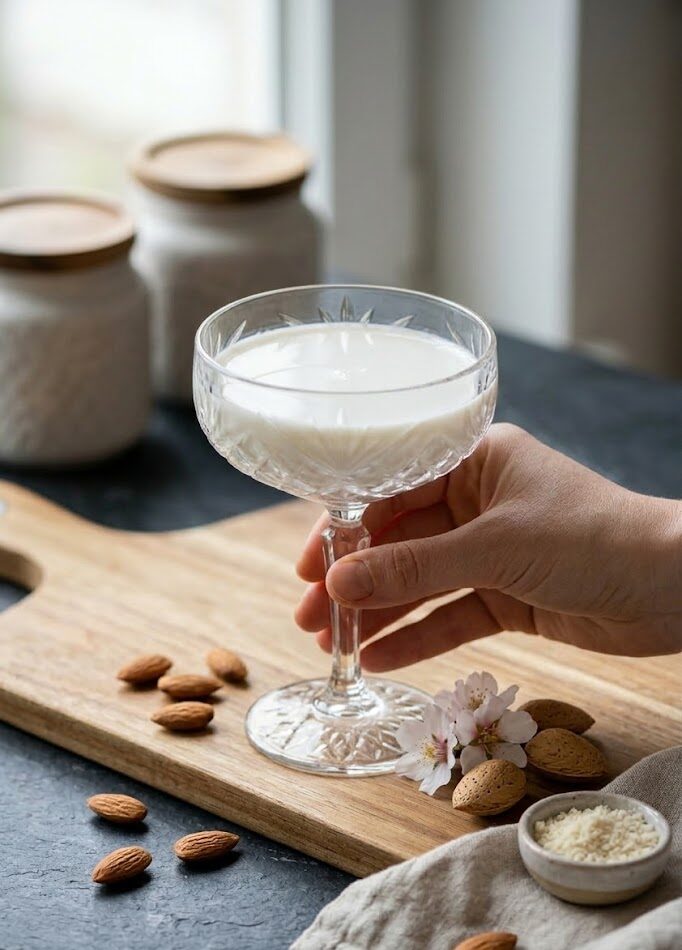
Learning how to make almond milk at home is easier than ever, and the results are creamy, fresh, and full of flavor. This homemade almond milk is naturally dairy-free, slightly sweet, and customizable with flavors like vanilla or maple syrup. Whether you use it for smoothies, cereal, baking, or just a refreshing glass on its own, it’s a versatile kitchen staple.
Why Make Your Own Almond Milk
Making almond milk from scratch has so many benefits:
- Rich and creamy: Using whole raw almonds gives a natural creaminess that store-bought versions often lack.
- Customizable flavors: Sweeten with maple syrup, honey, or monk fruit, and add spices like cinnamon or vanilla.
- Zero waste: Don’t throw away the leftover almond pulp! It’s perfect for baking, adding to oatmeal, or boosting smoothies with extra fiber and protein.
Homemade almond milk is not only delicious but also economical and eco-friendly. You know exactly what’s in it, avoiding preservatives and unnecessary additives.
What You Can Pair Almond Milk With
This nut milk is perfect with:
- Cereal, granola, or oatmeal
- Baked treats like cookies, muffins, and cakes
- Coffee or tea for a creamy twist
- Fruit bowls or chocolate desserts
With its mild flavor and creamy texture, almond milk enhances nearly any dish without overpowering it.
How to Make Almond Milk Step by Step
Step 1: Soak the Almonds
Start by soaking raw almonds in a bowl of water overnight or at least 2–3 hours. This softens them, making them easier to blend and improving digestibility. After soaking, drain and rinse the almonds thoroughly under cold water.
Step 2: Blend
Place the soaked almonds in a high-speed blender. Add 4 cups of cold, filtered water. If you want, include flavorings like 1 teaspoon of vanilla extract or 1 tablespoon of maple syrup or honey. Blend on high for 2–3 minutes until smooth and creamy. The mixture should be free of chunks.
Step 3: Strain
Line a large bowl with a nut milk bag or a fine cloth. Pour the almond mixture into the bag, then gently squeeze to extract the milk. The pulp left behind is nutrient-rich and can be repurposed in recipes like cookies, muffins, or energy bars.
Step 4: Store or Serve
Pour the fresh almond milk into cups to enjoy immediately, or transfer to clean bottles or jars and refrigerate. Fresh almond milk will last up to 3 days in the fridge.
Print
How to Make Almond Milk at Home
- Total Time: 3 hrs 8 min
Ingredients
1 cup raw almonds, soaked for at least 2–3 hours or overnight
4 cups cold filtered water
Optional flavorings:
1 teaspoon vanilla extract
1 tablespoon maple syrup or honey
Instructions
- Soak the almonds: Place raw almonds in a bowl and cover with water. Let them soak overnight or at least 2–3 hours. Drain and rinse thoroughly.
- Blend: Add soaked almonds to a high-speed blender with 4 cups of cold filtered water. Add optional vanilla extract or sweetener if desired. Blend on high for 2–3 minutes until smooth and creamy.
- Strain: Position a nut milk bag or a fine cloth over a large bowl. Pour the almond mixture into the bag and gently squeeze to extract the milk. The remaining almond pulp can be used in baking, smoothies, or oatmeal.
- Serve or store: Pour almond milk into cups to enjoy immediately, or transfer to bottles or jars and store in the refrigerator for up to 3 days.
Notes
- You can swap almonds for other nuts or seeds like cashews, oats, or hemp hearts.
- Sweeteners can be adjusted to taste. Try maple syrup, honey, or monk fruit sweetener.
- If you don’t have a nut milk bag, a fine mesh sieve works well.
- Leftover almond pulp is perfect for cookies, muffins, energy bars, or adding to oatmeal for extra fiber and protein.
- Serving size is 1 cup.
- Prep Time: 3 hrs
- Cook Time: 8 min