
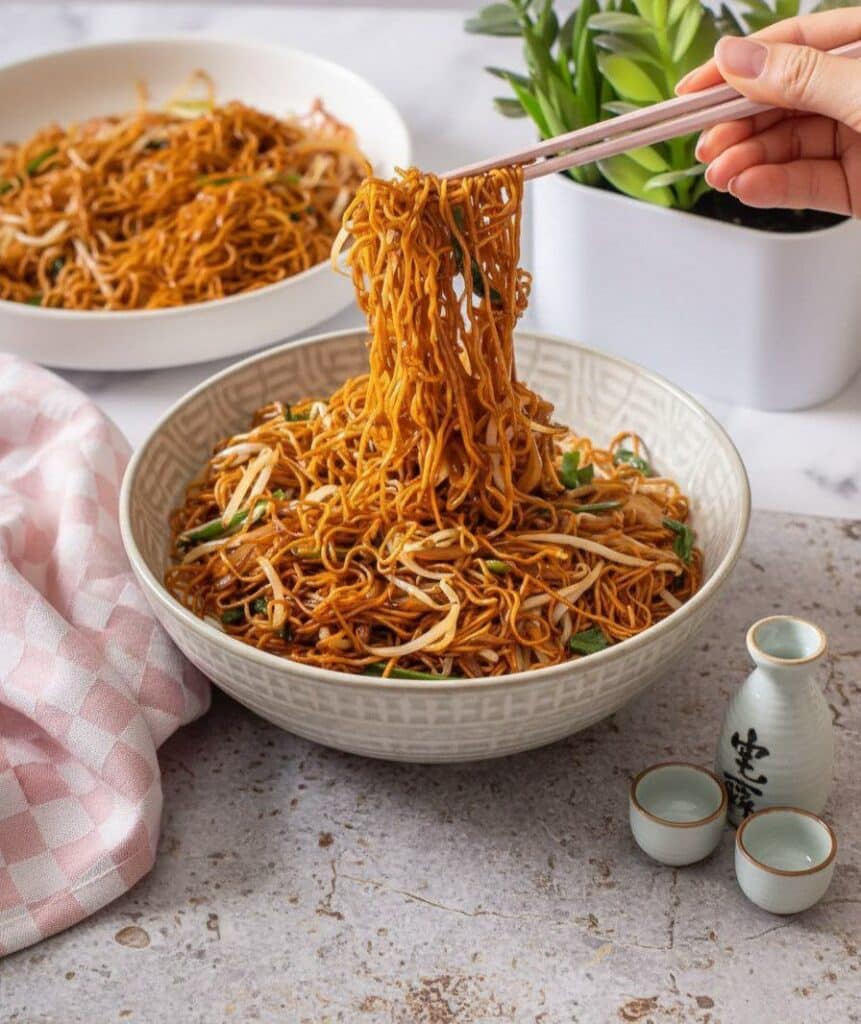
Cantonese-style crispy chow mein is one of the simplest and most satisfying noodle dishes you can prepare at home. This beloved Chinese recipe features pan-fried egg noodles tossed with tender onions, crisp bean sprouts, green onions, and a rich soy-based stir-fry sauce. With its irresistible combination of textures and savory depth, it’s no surprise that it’s a staple in many Hong Kong–style eateries.
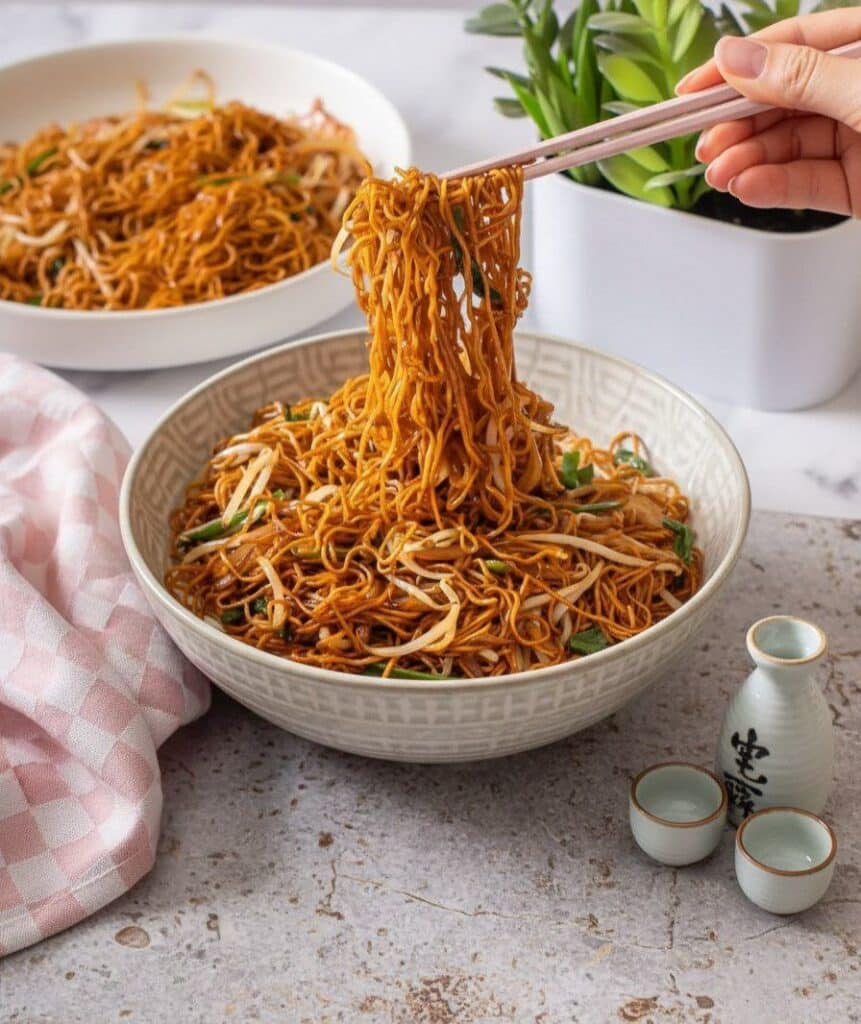
One of the biggest advantages of this dish is just how fast it comes together. With only a handful of pantry-friendly ingredients and a short cooking time, you can have a restaurant-quality plate of noodles ready in under 15 minutes. Whether you enjoy it as a quick lunch, a side dish, or part of a larger meal, this chow mein brings authentic flavor without the fuss.
What Is Cantonese Chow Mein?
Cantonese chow mein, often called “soy sauce pan-fried noodles,” is a traditional Chinese stir-fry dish known for its signature crispy texture. Thin egg noodles are lightly blanched, then pan-fried until golden and slightly crunchy before being tossed with aromatics and a glossy soy-forward sauce.
This noodle dish is one of the most iconic in Cantonese cuisine, often served at dim sum restaurants and small Hong Kong cafés. While simple in appearance, its appeal lies in the balance of savory, lightly sweet, and umami flavors paired with the contrast between tender vegetables and crisp noodles.
Ingredients
Everything you need for this recipe can typically be found in a well-stocked grocery store or Asian market. The ingredients are straightforward and versatile, making this dish perfect for busy days or last-minute meals.
Base Ingredients
- Chow mein egg noodles: Fresh thin egg noodles designed for chow mein work best for their springy texture and ability to crisp up beautifully.
- Yellow onion and green onion: Provide sweetness, aroma, and freshness.
- Bean sprouts: Add crunch and lightness to balance the noodles.
- Corn oil: A neutral, high-smoke-point oil ideal for high-heat stir-frying.
- Sesame oil: Added at the end for an extra layer of nutty, aromatic depth.
Stir-Fry Sauce
- Dark soy sauce: Gives the noodles their deep caramel color and robust flavor.
- Regular soy sauce: Provides saltiness and savory notes.
- Oyster sauce: Contributes a rich, slightly sweet umami character.
- Fish sauce: Enhances the overall complexity of the dish.
- Granulated sugar: Balances the savory elements.
- Water: Helps the sauce coat the noodles evenly.
Substitutions and Add-Ons
This recipe is intentionally flexible, allowing you to adapt it to your preferences or what you have on hand.
Substitutions
- Neutral oils: Vegetable, canola, avocado, or peanut oil all work well.
- Alternative noodles: Dried egg noodles, ramen, or even thin spaghetti can be used in a pinch.
- Aromatics: Garlic chives can be swapped for green onions.
- Soy alternatives: Tamari or coconut aminos offer similar flavor profiles.
- Sugar options: Brown sugar or honey can be used to sweeten the sauce.
Additions
- Protein: Chicken, beef, pork, shrimp, or tofu makes this dish more filling.
- Vegetables: Broccoli, cabbage, bell peppers, snap peas, carrots, and mushrooms make great additions.
- Heat: Fresh chiles, chili oil, red pepper flakes, or sriracha for spicy variations.
How to Make Cantonese Chow Mein
Follow these simple steps to build layers of flavor while keeping the process quick and efficient.
1. Prepare the noodles
Pour boiling water over the noodles and let them soak for 30 seconds to 1 minute, just until they soften. Drain well and set aside.
2. Mix the sauce
In a small bowl, whisk together dark soy sauce, regular soy sauce, oyster sauce, fish sauce, sugar, and water until the sugar dissolves completely.
3. Sauté the aromatics
Heat 1 tablespoon of corn oil in a wok over medium-high heat. Add sliced onions and the white parts of the green onions. Stir-fry for about 1 minute, then remove them from the wok and set aside.
4. Pan-fry the noodles
Add another tablespoon of corn oil to the wok. Once hot, spread the noodles into a thin, even layer. Let them crisp for about 2 minutes without stirring.
Flip the noodles, drizzle the last tablespoon of oil around the edges of the wok, and cook for another 2 minutes until lightly golden and crisp.
5. Add vegetables and sauce
Return the onion mixture to the wok along with bean sprouts and the green parts of the green onions. Pour in the sauce and toss gently until everything is evenly coated and heated through, about 1–2 minutes.
6. Finish and serve
Remove the wok from heat and drizzle sesame oil over the noodles. Toss briefly and serve immediately.
Expert Tips
- Use fresh noodles: They crisp better and hold their structure more effectively than dried noodles.
- Don’t skip drying: After soaking, drain the noodles well to avoid splattering when frying.
- Prepare ingredients beforehand: Having everything prepped makes the cooking process seamless and prevents overcooking.
- Use high heat: A hot wok ensures the noodles develop the classic Cantonese crispiness.
- Cook proteins separately: If adding meat or tofu, cook it first and mix it back in at the end.
- Taste as you go: Adjust soy sauce, sugar, or seasoning as needed.
Storage Instructions
Refrigeration
Store leftovers in an airtight container for up to 3 days. Reheat in a wok for the best texture or microwave until warm.
Freezing
This dish freezes well for up to 3 months. Thaw in the refrigerator overnight before reheating.
Pairing Suggestions
Cantonese chow mein can stand alone as a light meal or complement a wide variety of dishes:
- Chicken: Honey garlic chicken, soy-glazed chicken, or sesame chicken.
- Beef: Beef and broccoli, black bean beef, or Mongolian-style beef.
- Pork: Pan-fried dumplings, crispy pork belly, or pork and chive potstickers.
- Vegetables: Stir-fried bok choy, Chinese broccoli with oyster sauce, or garlic green beans.
FAQ
What does Cantonese chow mein taste like?
It has a savory, slightly sweet flavor with deep umami from the soy-based sauce, paired with lightly crispy noodles.
How is chow mein different from lo mein?
Chow mein noodles are pan-fried for crispiness, while lo mein noodles are boiled and tossed for a softer texture.
What noodles should I use?
Fresh thin egg noodles labeled “chow mein” or “Hong Kong-style” are ideal for this dish.
Cantonese-Style Crispy Chow Mein: A Quick and Flavorful Classic
- Total Time: 15 min
Description
A quick and delicious Cantonese-style crispy chow mein made with pan-fried egg noodles, tender aromatics, and a glossy soy-based stir-fry sauce. This restaurant-quality noodle dish comes together in minutes and delivers incredible texture and flavor.
Ingredients
For the Noodles
12 oz fresh thin chow mein egg noodles (Hong Kong–style)
½ small yellow onion, thinly sliced
5 green onions, cut into 2-inch pieces (whites and greens separated)
2 cups bean sprouts
3 tablespoons corn oil (or another neutral oil)
1 teaspoon sesame oil, for finishing
Stir-Fry Sauce
2 tablespoons dark soy sauce
1 tablespoon regular soy sauce
1 tablespoon oyster sauce
½ teaspoon fish sauce
1 tablespoon granulated sugar
1 tablespoon water
Instructions
Place the noodles in a heat-safe bowl and pour boiling water over them. Allow them to soak for 30 seconds to 1 minute, just until softened. Drain well and set aside.
In a small bowl, combine dark soy sauce, regular soy sauce, oyster sauce, fish sauce, sugar, and water. Stir until the sugar dissolves completely.
Heat 1 tablespoon of corn oil in a wok over medium-high heat. Add the sliced onions and the white parts of the green onions. Stir-fry for about 1 minute, then remove from the wok and set aside.
Add another tablespoon of corn oil to the wok. When hot, spread the noodles in an even layer. Let them crisp for 2 minutes without stirring.
Flip the noodles, drizzle the final tablespoon of oil around the edge of the wok, and cook for another 2 minutes until crisp and lightly golden.
Return the onion mixture to the wok. Add bean sprouts and the green parts of the green onions. Pour the sauce over the noodles and gently toss everything together. Cook for 1–2 minutes, or until evenly coated and heated through.
Remove from heat and drizzle sesame oil over the noodles. Toss once more and serve immediately.
Notes
- Fresh chow mein noodles produce the best crispiness and texture.
- Drain the noodles thoroughly after soaking to avoid excess moisture in the wok.
- For protein additions, cook them first and mix them back in at the end.
- Adjust seasoning to taste with extra soy sauce or a pinch of sugar.
- For a spicier version, add chili oil or sliced fresh chilies.
- Prep Time: 5 min
- Cook Time: 10 min